
Prevention
What Is Heart Disease?
Heart disease refers to a group of medical conditions that affect the heart and its ability to function properly. These conditions include coronary artery disease, heart valve disorders, heart rhythm problems, congenital heart defects, and heart failure.
One of the most common forms is coronary artery disease, which occurs when the blood vessels supplying the heart become narrowed or blocked, often due to the buildup of cholesterol-containing plaque. This can reduce blood flow to the heart and increase the risk of a heart attack.
Early diagnosis, appropriate treatment, and healthy lifestyle changes can help manage many types of heart disease and reduce the risk of serious complications.
Common Types of Heart Disease
1. Coronary Artery Disease
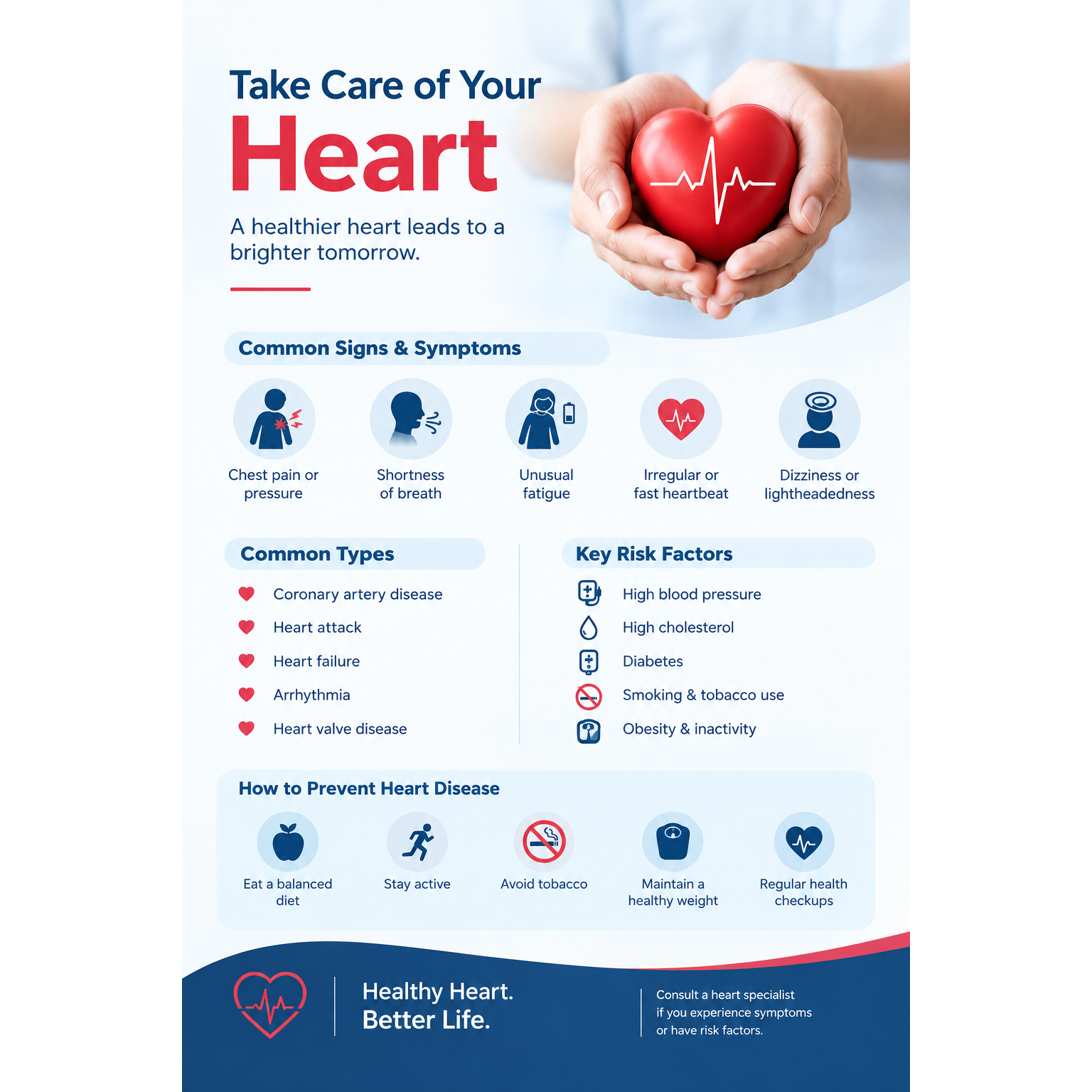
Coronary artery disease develops when the arteries supplying blood to the heart become narrowed or blocked. It may cause chest pain, breathlessness, or a heart attack.
2. Heart Attack
A heart attack occurs when blood flow to part of the heart muscle is severely reduced or blocked. It is a medical emergency that requires immediate treatment.
3. Heart Failure
Heart failure occurs when the heart cannot pump blood effectively enough to meet the body's needs. Common symptoms include fatigue, breathlessness, and swelling in the legs or ankles.
4. Arrhythmia
Arrhythmia refers to an abnormal heart rhythm. The heartbeat may become too fast, too slow, or irregular, sometimes causing dizziness, palpitations, or fainting.
5. Heart Valve Disease
Heart valve disease occurs when one or more heart valves do not open or close properly, affecting normal blood flow through the heart.
6. Congenital Heart Disease
Congenital heart disease includes structural abnormalities of the heart that are present from birth.
Symptoms of Heart Disease
Heart disease symptoms may vary depending on the underlying condition. Some people may have no noticeable symptoms until the condition becomes advanced.
Common warning signs include:
Chest pain, pressure, tightness, or discomfort
Shortness of breath during activity or at rest
Unusual fatigue or weakness
Rapid, pounding, or irregular heartbeat
Dizziness or lightheadedness
Swelling in the feet, ankles, or legs
Reduced ability to perform everyday physical activities
Important: Chest discomfort, breathlessness, cold sweating, faintness, or pain spreading to the arm, back, neck, or jaw may indicate a heart attack. Seek emergency medical care immediately. Do not wait for symptoms to resolve on their own.
Causes and Risk Factors of Heart Disease
Several factors can increase the risk of developing heart disease, including:
High blood pressure: Can damage blood vessels and place additional strain on the heart.
High cholesterol: Can contribute to plaque buildup in the arteries.
Diabetes: Increases the risk of cardiovascular disease.
Smoking and tobacco use: Damage blood vessels and increase the risk of heart attack and stroke.
Obesity and physical inactivity: Can contribute to high blood pressure, diabetes, and unhealthy cholesterol levels.
Unhealthy diet: Excess salt, trans fats, and high consumption of saturated fats can increase cardiovascular risk.
Family history: A family history of early heart disease may increase personal risk.
Age: Cardiovascular risk generally increases with age.
Chronic stress and poor sleep: May contribute to unhealthy cardiovascular and metabolic patterns.
Understanding these risk factors can help individuals take preventive steps and seek medical advice when needed.
If you are concerned about your cardiovascular health, consult Dr. Hardik Thakker for an appropriate assessment and personalised treatment plan.
Book an appointment on 08048038640
Heart health checkup in Mulund | Heart disease treatment in Mulund | Heart specialist in Mulund | Cardiologist in Mulund
Heart health checkup in Thane | Heart disease treatment in Thane| Heart specialist in Thane| Cardiologist in Thane
Heart health checkup in Airoli | Heart disease treatment in Airoli | Heart specialist in Airoli | Cardiologist in Airoli