

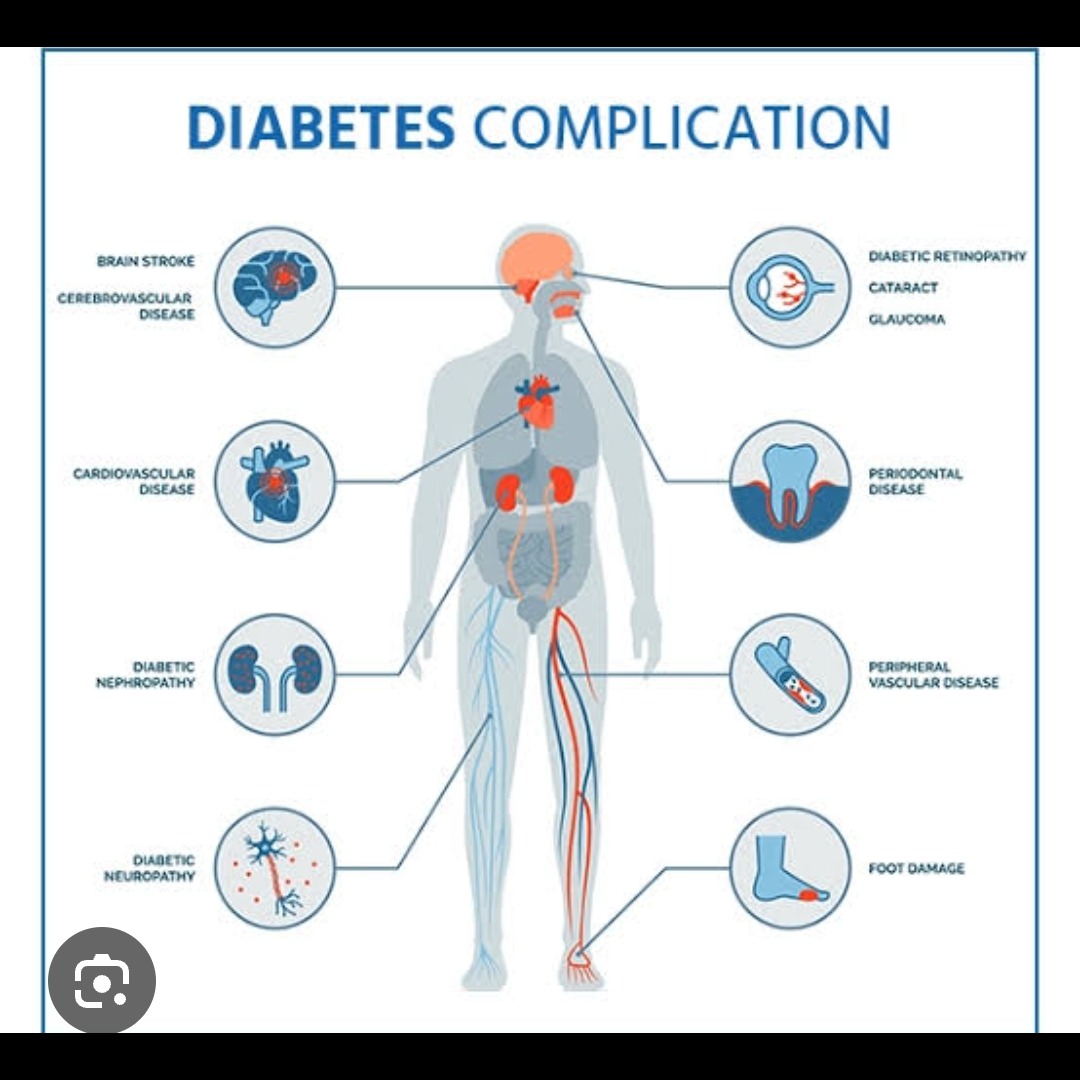
Diabetes can lead to a wide range of complications due to prolonged high blood glucose damaging blood vessels, nerves, and organs. These are generally divided into microvascular (small vessel) and macrovascular (large vessel) complications, along with other systemic effects.
1. Microvascular Complications
These result from damage to small blood vessels:
Diabetic Retinopathy – Damage to retinal vessels → vision loss or blindness.
Diabetic Nephropathy – Kidney damage → proteinuria, chronic kidney disease, possible renal failure.
Diabetic Neuropathy – Nerve damage →
Peripheral neuropathy (numbness, pain, tingling, risk of foot ulcers)
Autonomic neuropathy (gastroparesis, bladder dysfunction, erectile dysfunction, orthostatic hypotension)
2. Macrovascular Complications
Due to accelerated atherosclerosis:
Coronary Artery Disease → angina, myocardial infarction (heart attack)
Cerebrovascular Disease → stroke, transient ischemic attack
Peripheral Arterial Disease → claudication, ischemia, poor wound healing
3. Other Complications
Diabetic Foot → ulcers, infections, gangrene (often due to neuropathy + poor circulation)
Infections → increased susceptibility (skin, urinary tract, fungal infections)
Skin disorders → diabetic dermopathy, necrobiosis lipoidica
Oral health issues → periodontal disease
Cataracts and glaucoma
4. Acute Complications
Diabetic Ketoacidosis (DKA) – more common in type 1
Hyperosmolar Hyperglycemic State (HHS) – more common in type 2
Severe hypoglycemia – due to overtreatment or missed meals